
五感图
なぜ服を着ない…「不適切行為」のインフルエンサー、謝罪動画の「不適切すぎる」衣装でさらに大炎上(海外)_我的网站

一 | 成人向けの会員制SNSオンリーファンズなどで活動するオーストラリア人の女性インフルエンサーが旅行先で万引きし、その様子が映った防犯カメラ映像が公開されて炎上している。彼女はこの行動を謝罪する動画を投稿したのだが、その内容だけでなく謝罪に全く相応しくない露出度の高い服装も非難の対象となり、さらなる大炎上を招く結果となった。
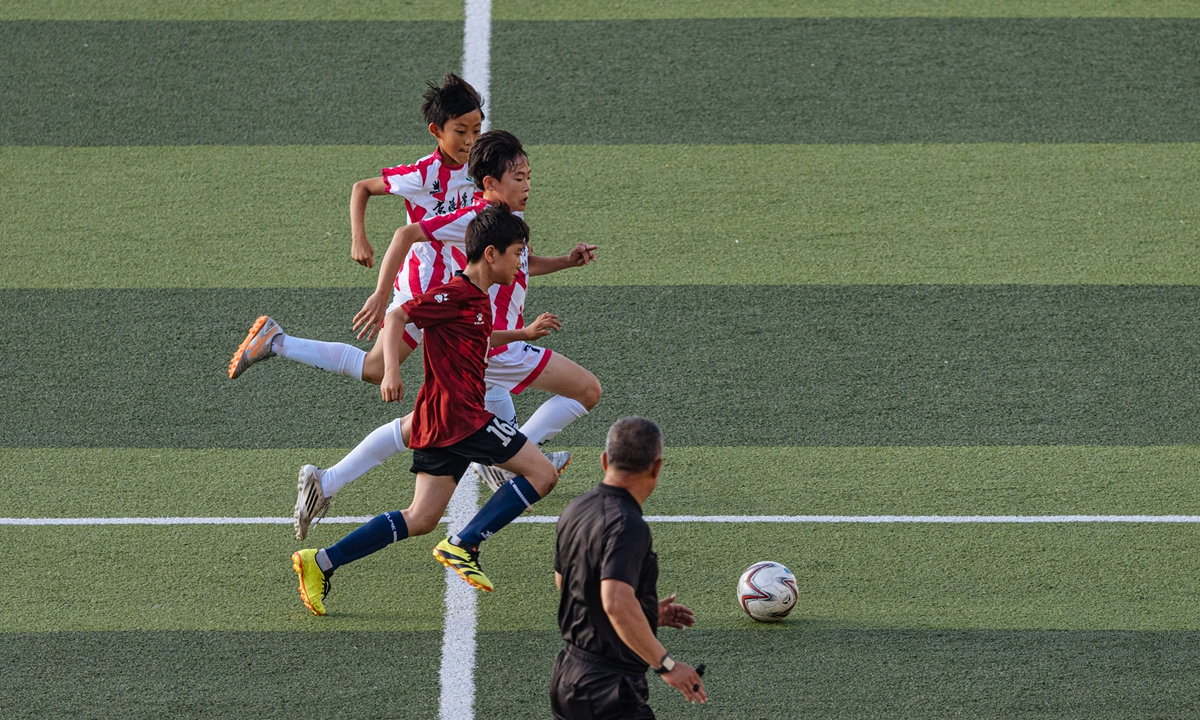
It was a busy school break. The national finals of the 2025-26 youth campus soccer league, rounds of the fifth China Youth Football League, city and provincial campus competitions, private club cups and overseas invitationals filled the calendar. Some children played close to home; others spent part of their summer travelling with teammates from one tournament to another.
The sixth 2034 Cup was among the most visible. Its 39 regional qualifiers drew 882 teams and 12,604 players, with 128 teams reaching the finals in Suzhou, East China's Jiangsu Province. Teams from other countries also took part, adding an international element to a tournament aimed at primary-school players, according to the Xinhua News Agency.
Does this crowded calendar by itself signal a turnaround for Chinese soccer? China's men last reached the World Cup in 2002. But the summer offered a view of a playing base being built from below and raised a harder question: Can the enthusiasm survive the return to school, unequal access to training and the growing costs borne by families?
From the first touch
In China's youth soccer system, coach Zhao Xinxin works at its broadest and most fundamental level - introducing young children to the game.
He coaches an introductory group of about 15 three-year-olds, three interest classes of 15 to 20 children aged five to 10, and four advanced groups of roughly 10 players aged five to 14. He has worked with more than 100 children over the years.
Starting younger is one of the clearest changes Zhao has observed in recent years. Soccer is appearing not only in schools and social clubs but also in some kindergartens. Most parents initially want an after-school activity that gets their kid moving.
Only when a player begins to stand out do questions about more advanced training and a possible route forward arise.
That route now has several layers. A child in a commercial club can move from introductory and interest classes to advanced teams. A school player may be selected for district and city teams, then enter national campus competitions; professional academies, sports schools and social clubs provide other pathways.
China began promoting campus soccer on a national scale in 2015, when six government departments issued guidelines calling for soccer to be incorporated into school education through designated soccer schools, regular competitions, teacher training and improved facilities, according to the Ministry of Education.
The program has continued to expand while shifting its focus from increasing participation to improving the quality of teaching, training and competition. In 2025, another 4,928 schools were recognized as national youth campus soccer schools, according to the ministry.
The result is more soccer on the calendar. Zhao told the Global Times that youth matches take place somewhere in Beijing almost every week, especially during school holidays. His club's advanced teams play weekend fixtures with referees and standings, as well as regional competitions and finals.
Tournaments such as the 2034 Cup give this broad base a visible target. Soccer commentator and youth-project organizer Dong Lu launched the event in 2021 after repeatedly seeing Chinese social media celebrate Japan's high-school soccer tournament. Its name looks toward the 2034 World Cup, when the first group of participants will be about 25.
Earlier this summer, a team selected through Dong's youth soccer project offered another source of encouragement. The Chinese Football Boy U12 team won all seven matches at the Sigismondi International Youth Cup in Italy, becoming the first Asian team to claim the championship.
Yet Dong cautioned against reading too much into a single championship. Strong players, he said, must emerge from a much broader soccer culture. "Players come from the people around us, from the soil and culture in which they grow," he told the Global Times.
Who can keep playing?
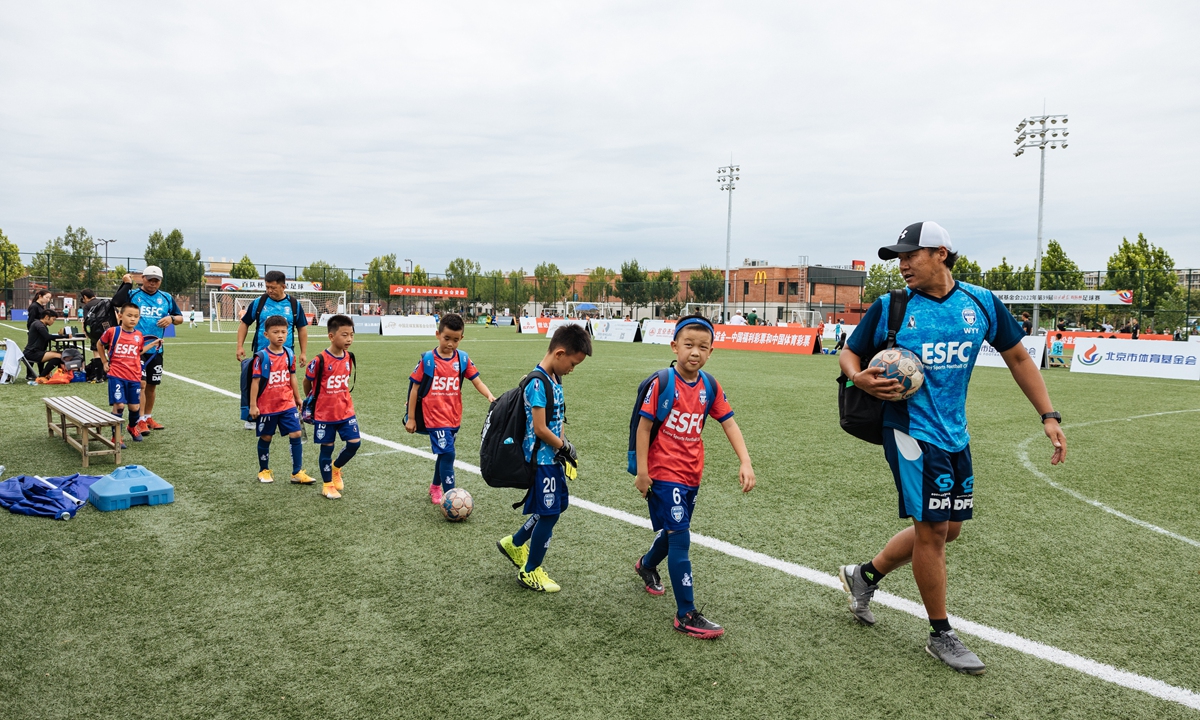
For Zhao, the first major break comes at 12. Children may train throughout primary school, then stop after entering middle school as homework, examinations and family expectations take over - a pattern he calls "retiring at 12."
Campus soccer should be the main way to keep the player pool broad, he said, because school is where nearly every child spends most of the day. More schools now provide soccer classes and in-class competitions, but implementation varies.
Zhao recalled a class tournament in which a child was injured. After a parent complained, the remaining matches were cancelled. Safety concerns are understandable, he said, but cancelling competition altogether removes opportunities from every child.
For families, this is also the stage when soccer stops being a simple extracurricular activity. If a child has shown unusual ability, parents must decide whether to seek stronger teams, change schools, accept more travel and training, or keep soccer only as an interest. The decision depends not only on talent and the child's wishes, but also on educational expectations and how much time and money the household can commit.
The contrast with Europe lies partly in continuity. Zhao cited his nephew in Hungary, who trained at a Barcelona-affiliated academy between the ages of six and eight before being selected by a local club at nine.
Once children join organized training there, he said, they are registered at relatively low cost, and their movement between clubs is recorded in the soccer association's system - closer to transferring schools than simply leaving one commercial course for another.
Dong made a broader comparison. Japan's national team increasingly draws on players who have further developed further in European leagues, while China still relies mainly on its domestic league to prepare future internationals.
In his view, the two systems operate like production lines with different competitive standards. Young Chinese players therefore need more high-level matches, whether foreign teams come to China, Chinese teams travel abroad or selected players enter overseas leagues.
But overseas training cannot substitute for a domestic system, nor is it open to every family. Zhao said it requires ability, physical readiness, money and the capacity to adapt to a different language, diet and daily life. Some parents send a child abroad; others move with them, reorganizing work and family life around soccer without knowing whether the child will ever turn professional.
For now, the most telling test may come not in 2034, but this coming September, when a child enters a new grade and decides whether there is still time in the week for soccer.
。

二 | 【動画】なぜ服を着ない...「不適切行為」のインフルエンサー、謝罪動画の「不適切すぎる」衣装でさらに大炎上 ジェマ・ドイルというこのインフルエンサーは友人とバリ島にバカンスに出かけ、現地の衣料品店で30ドル相当のビキニの水着を万引きした。店主は防犯カメラ映像を公開し、これを見た人々から怒りの声が殺到。インスタグラムにはドイルを非難するアカウントまで作成された。その後、ドイルは「犯行」を認めて謝罪し、自身のアカウントに「水着を盗んだのは本当」「愚かだった」と反省の言葉を口にした。しかし、騒動はこれで終わらなかった。動画の中の彼女が、およそ反省しているようには見えなかったからだ。彼女はビキニ姿のままカメラを回し、笑いながら「たったそれだけのこと」などと話し、「30ドルくらいのものだったし、面白半分でやっただけ」とした。さらには店主から「デブ」と言われたと主張して最後にはプールに飛び込んで、「f**k you」と叫んだのだった。■2本目の謝罪動画を出すも、こちらも不適切衣装で炎上 これには地元の人々だけでなくオーストラリアの人々からも批判が殺到。ついには殺害予告まで出る騒動となり、ドイルはさらなる謝罪動画の公開に迫られた。今度は彼女は真面目な表情で「本当に謝りたい」「申し訳ありません」などと語った。ただこのような行動は、過去に「頭を殴られた影響で脳に損傷があるせいだ」などと主張し、また「店主に1500ドルを請求されたが、そこまでは払いたくなかった」「水着1枚のことで殺害予告なんて、ちょっと待ってほしい」などとも語っている。なお、今回の動画でも彼女はビキニ姿だった。

三 | 本気で謝罪しているのか、あえて炎上を煽っているのか。彼女の真意は分からないが、しばらくは騒動が収まることはなさそうだ。
Current article:http://x9acmkl.runtunpaixufenjuduishuang.pics/list_cri/wj90.html
Published on:14:18:33


